
TOLL FREE 877 278 2142 USA
TOLL FREE 844 776 3727 USA & CAN
TOLL FREE 877 278 2142 USA
TOLL FREE 844 776 3727 USA & CAN
The island of Cozumel is located off Mexico's eastern coast. Cozumel sits within the Caribbean Sea, south of Cancun and near Playa del Carmen on the mainland. Part of the Mexican Riviera Maya, tourists like to go to Cozumel primarily for the beaches and water recreation. The island experiences tropical weather and offers three cruise ship piers, including an international pier.
You can check our Riviera Maya packages https://sqngetaways.com/packages
Mayan Ruins
Cozumel holds several ancient Mayan ruins sites. San Gervasio is the largest site on the island and the shine of the goddess of fertility Ix Chel. The island contains 24 sites discovered thus far, including El Cedral and the coastal watchtower Castillo Real. Visitors may also join a larger tour including sites on the Yucatan Peninsula.
Beaches
The list of Cozumel's beaches is an impressive one for an island only 32 miles long and 9 miles wide. The beaches include Passion Island Beach, Playa Uvas, Playa Corona and Paradise Beach. According to the This is Cozumel website, San Francisco is a family beach, Palancar Beach is a quieter area and Playa San Martin offers unspoiled beauty on the eastern side of the island. Paradise Beach serves as an example of all of Cozumel's beaches, lined with coconut palms, featuring white sands and clear water. Paradise Beach also has a heated pool, restrooms and changing rooms.
Diving
A large number of coral reefs ring the island. The reefs are a part of the Cozumel Reefs National Marine Park. Dives in the area range from 25 feet to 130 feet in depth, depending on the reef, and area dives range from beginner level to advanced. Dive shops and scuba instruction are available on the island. Businesses such as Aqua Safari offer specialty diving courses for night dives, deep and drift diving.
Natural Areas
Punta Sur Eco Park, a 2,700-acre reserve, allows visitors to snorkel Chunchacaab reef, enjoy a catamaran ride or kayak tour of Colombia lagoon and explore the Celarain lighthouse or the Mayan ruin El Caracol. The park brings visitors close to wildlife and tropical flowers. Punta Sur Beach has restrooms and showers for those who want to go swimming and sunning.

Parks
Cozumel's parks offer visitors a wide variety of activities in and out of the water. At Chankanaab Park, only 3 miles from the cruise ship terminals, guests can try water recreation such as snorkeling, scuba, snuba, sea trekking, parasailing, and kitesurfing. Guests also have the opportunity to swim with manatees, sea lions, and dolphins. The park offers hammocks, beach chairs, huts, restrooms and showers for those who want to relax on the beach
At Playa Mia Grand Beach Park, guests may learn to prepare Mexican cuisine; visit the shopping center for crafts, clothing, jewelry and beach supplies; snorkel, scuba dive, take a banana boat ride or enjoy an outdoor massage. The park offers beach games, a swimming pool and for kids, it contains puzzles and giant-sized games. Craft sessions, sand castle contests and Spanish language lessons are also available, the also rents lockers, towels and umbrellas for use on the nearly 500 feet of sandy beach.
So choose your dates, book your stay at https://sqngetaways.com/packages, book your flights and get ready to have the most incredible Beach Geatway.

A weekend city break, a big family holiday, or a last minute business trip: whatever the reason you find yourself stressed out at the airport, here are a few insider tips. From secrets on how to jump the check-in queue to how to get an upgrade.
Figure out where the airport is
and how you get to it in advance. I find Google Maps travel planner useful but
it’s always best to check directly with public transport sites for timetables.
Chris Sharp, Business Intelligence Administrator
If you’re using a boarding pass
on your mobile phone, take a screenshot of it and save it in your pictures
folder on your phone (rather than relying on the airline’s app or on a good
internet connection at the airport).
Jon Thorne, User Satisfaction Manager
Or:
Although we live in an age where
you can check in with your smartphone and email, you never know when your phone
may just run out of battery or pack in.
Sam Ayles, PR Executive
Certain credit cards targeting travellers offer perks like free access to airport lounges. For example, I hold a card which gets me a priority lounge pass for two entries each year at Singapore (no minimum spending on the card required).
Another card I’ve got gives me
free airport limousine transfer from my home to the airport as long as I’ve
booked my travel on the card and I spend the minimum set amount.
Hollie Tan, Accounts Executive
During holiday times airports like London Gatwick can get EXTREMELY busy. You could be standing the check-in queue for ages.
The trick in that case is not to
join the queue but to go and sit in a café and read a book. When the airport is
that busy they call out the flights that are due to depart first and let their
passengers through as a priority. You can therefore sit and relax while you
wait for your flight to be called. When it is you can go straight to the front
of the queue.
Sam Heyman, Test Engineer
If you’re really cutting it fine
for time, a polite word to an airport employee almost always results in a queue
jump at security. Failing that, a plea to fellow passengers in the queue is
your next best option.
Lisa Imlach, PR Executive
At security, if you don't want to
set off the alarms after waving goodbye to your hand luggage, keys, mobile
phone, laptop etc, make sure you remove all the Crown Jewels you are wearing.
Apparently, my watch, earrings, necklace and ring MIGHT set off the alarms. On
a recent visit to the airport, I was subjected to the most intimate body search
of my 50 year-old life (bearing in mind I travelled back and forth to the Far
East from the age of 10). And I was only travelling to the Shetlands!
Alison Stimpson, Executive PA
Take a spare ziplock bag or two
to get your toiletries through security checks – it’s ridiculous and annoying
that some airports will charge you a few quid if you forget one!
Rachel Evatt, Product Director
Go for the one with the ‘suits’.
It will move much quicker.
Alistair Hann, Skyscanner Chief Technology Officer
I make sure I wear socks of the
same colour and don´t look to old! Just in case I have to take off my shoes.
Angel Guirado, Market Development Manager, Spain
Try to fly at a time which means
it’s socially acceptable to taste the whisky samples at duty free - i.e. not
6am.
Chris Sharp
Set an alarm on your phone to go
off at boarding time, it’s easy to get distracted in the departure lounge.
Chris Sharp
If travelling with kids, ensure
you have their game consoles handy (and FULLY CHARGED) to allow you to have as
stress-free a time while waiting to depart. Having three kids myself, it’s
definitely on my MUST DO list for the airport. Each of the kids has a small
backpack containing game consoles, pens, pencils and a pad of paper so they can
draw etc. Plus it saves on the wallet if the kids happen to spy those $1-a-go
arcade machines. I’m now a master at noughts & crosses, hangman etc…
Ronnie Walker, Senior Engineer
Connect to WiFi and get some work
done.
Or:
- read the economist from cover to cover. It's something to look forward to.
- Get your shoes shined
- Buy clothes, and do other things you would have to do anyway, so use the dead
time.
Gareth Williams, Skyscanner CEO
Sit comfortably in departures
where you can see the boarding desk and (assuming you have a pre-allocated
seat) read your book until the last possible minute. When the queue is down to
one person, get up and casually stroll through the departure gate onto the
plane. The plane won’t leave without you until they have at least called out
your name.
Dom Porter, Software Engineer
Always wait until the ‘flight
closing’ announcement before boarding the plane. Then, if you see any empty
seats in Business Class, as you work your way through to Economy, sit in one of
them, on the basis that it must be available, given that the flight was
closing. Hope that the flight attendants won’t question it. Sometimes it works,
sometimes it doesn’t!
Mark Logan, Chief Operating Officer (Mark says this is a tip from a ‘friend’.
He would never do this!)
I’ve had some very varied
experiences arriving at immigration, particularly in the USA, ranging from
being processed quickly in a few minutes to being asked to go off to the
interview room for a secondary interview (that was a fun start to my
honeymoon). Be smartly dressed, polite and well spoken, make good eye contact
with the immigration official and have a clear idea of where you are going next
(name of hotel, car hire). Never ever make jokes and do not use your mobile
phone. Also make sure you have a credit card to hand and if possible local
currency as you may be asked to prove you are able to pay your way If you are
travelling on business, never say “I am here to work” as they will be concerned
that you are going to be working illegally; a better phrase is: “I am here to
have some meetings with business colleagues”.
Robert
Smith, Technical Manager
Whenever you get up to leave
somewhere at the airport - in a café, a bar or at the gate - always turn round
and make sure you haven’t left anything behind - like your tickets.
Suzanne Morrison, Skyscanner Project Manager
That way you’ll gain access to
the lounge as their guest, where you can stockpile glossy magazines, packets of
biscuits and condescending looks.
Lisa Imlach
Either get there
early or know how to get through the airport better than George Clooney in Up in the Air. When you add people
who are unpredictable to a controlled environment, it’s organised chaos.
Matt Smith, Content Partnerships Executive

It is the month of February and love is in the air. Cupid is soaring in the Puerto Peñasco winds, with his shiny bow and arrow ready to pull the arrow tight and let it fly. Who knows where it will strike or when or whom? Usually when love strikes, it happens fast, in a blink of an eye. Bam, you're hit. And as some may know, especially if you're in love, trying to be in love or looking for love, the right atmosphere or activity can make a difference. So, peruse this list and try one or all of the ideas with that special someone and just see if the arrows don’t come flying!
1. Buy a Love Song from a Mariachi for your sweetheart. This one can really work well if you plan ahead. In the majority of the restaurants in town and in Old Port area they have various groups of traveling mariachis’. Excuse yourself, go to the banos and ask one to come over and play a love song when you get back to the table. I recommend “Besame Mucho.”
2. Romantic Picnic for Two. Take a Mexican blanket, a picnic basket, some beverages and go sit on the beach. Surprise is a romantic factor. Just pick them up and leave the activity and destination a secret.
3. Get a special getaway. Just cozy up to your sweetheart in a hot tub looking at the ocean and make it a special night or weekend. Believe it or not, with SQN Getaways you can enjoy a private terrace with plunge pool, one bedroom with a king-size bed, and one bathroom with Jacuzzi tub, check our getaway deals in www.sqngetaways.com or call 877-278-2142
4. Go Horseback riding on the beach. There are several local businesses that have horses for rent. It is very romantic to take a horseback ride on the beach with the one you love.

5. Go to Happy Hour at La Casa Del Capitan restaurant at Sunset. El Capitan is on the high peak overlooking the Malecon, Old Port and the Sea of Cortez. The views are beautiful and very romantic; you can also spend time next door at the Lighthouse Restaurant where they have live jazz music and spectacular views.
6. Be on the water at sunset. Rent a kayak, boat or take a Sunset Cruise. Puerto Peñasco offers both kayak rentals and boat rentals. If you are looking for the private tour and know how to drive a boat or use a kayak that is a good option and can be quite romantic. However, if you would rather sit back and let someone else drive try one of the various Sunset Cruises.
7. Couple massage for two. There are several massage therapists in Puerto Peñasco who can arrange to come to your room for a more private setting.
8. Sunrise Special in Cholla Bay. Make an early date to wake up one morning 30 minutes before sunrise. Wrapped in a big oversized blanket together is a great way to make a day romantic. A remarkable place is over in Cholla Bay where you can actually see the sunrise from the water. Depending on the tide, you can also walk out on the sand and look for washed up sand dollars. Afterwards, you can stroll to Xochitl’s Café and have an impressive Mexican breakfast.
9. Go Parking on a deserted beach. Puerto Peñasco is fortunate to have deserted beaches within a short drive. Many you can walk for miles with no one around and also pick up some good shells. The rest is up to you.
10. Go to the Malecon on a Sunday night and sit on a bench in front of the Colossal Shrimp Statue. Sunday night in Mexico is family night. It is a wonderful evening that friends and family use to spend time with each other and their significant others. When the fiery red ball drops into the ocean and a red glow is everywhere, somehow all seems warm and right with the world, love is abundant.
You’ve heard “Virginia is for Lovers”? Well, “Puerto Peñasco is for Lovers,” and this is just a few of the romantic things to do in Peñasco. Mucho Amore.
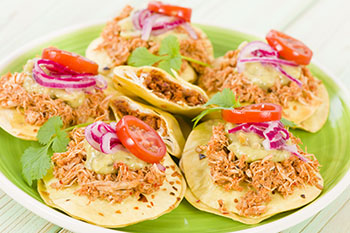
A vacation is an escape from the routine and a great opportunity to try new things. You’re visiting a whole other country with an ancient and rich culinary history. Traditional Mexican cuisine was added to the Representative List of the Intangible Cultural Heritage of Humanity by UNESCO in 2010, so try something new at every meal, and as we say here, “Buen provecho!” (Enjoy your meal!)
1.Sopa de Lima
A very tasty kind of chicken soup with a twist! It is based on a light chicken broth and served with shredded chicken, deep-fried tortilla chips, and what in the Yucatan Peninsula is known as lima. Not to be confused with limes or lemons, the limes a less acidic citrus fruit similar to lime but sweeter like an orange. Intriguing? Wait till you try it!
2.Panuchos
Small, handmade corn tortillas, stuffed with beans and then fried in oil or lard. They are served with shredded lettuce, some meat such as chicken, turkey or pork, tomato, and onion, previously seasoned with sour orange and salt. You should also try them with avocado, carrot, and colorado (a paste of pipian, chile, and achiote, also known as annato seeds). The panucho is said to have originated in Merida by a street vendor out of his typical ingredients but wanting to serve his hungry customers. That, however, is a story for another post.
3.Salbutes
Corn flour tortillas, deep fried in oil until they inflate and get crispy. They can be served with ground beef, chicken, or shredded turkey and are seasoned with tomato and lettuce, avocado slices, and chopped red onion. Ask for some refried black beans as a side dish. In fact, ask for panuchos and salbutes so that you can savor the flavor of both of these staples of Yucatecan cuisine.
4.Papadzules
These delicacies consist of corn tortillas soaked in a sauce made with pumpkin seeds, stuffed with eggs, and then bathed in a sauce of tomato with some habanero chili and onion. They are often garnished with chopped red onion and habanero chili, as well. Be careful with the habanero, it can be quite hot! Remember, if you’re not out for a spicy adventure, make sure to tell the vendor: sin picante, por favor! (Hold the spicy, please!)
5. Cochinita Pibil
A real feast for your senses, this dish is basically pork meat marinated in achiote, wrapped in a banana leaf, and cooked in an earth oven. According to some recipes from the early 1900’s, the entire pork (after some preparations, mind you) was baked in the earth oven. The cochinita pibil is accompanied with red onion in a sauce made with sour orange juice and habanero. It is usually eaten in tortas (a kind of sandwich) and tacos. This dish is also made with chicken; the famous Pollo Pibil. However you eat it and whatever meat you choose, Cochinita Pibil is definitely pulled pork paradise!

6. Kibis
Of course, we cannot forget the picturesque kibis. You can find people walking around the beaches with a glass box perched on their heads and shouting their singsong proclamation of “kibis… kibis!” Kibis are made with mashed wheat and ground beef or pork and seasoned with some spearmint, garlic, and onion. They are oval or round in shape and deeply fried. You should always eat them with some chopped red onions and, if you dare, habanero chili. These delicious darlings of Yucatan cuisine were actually brought to the region at the beginning of the 19th century by Lebanese immigrants. Today, they are a staple of the culinary heritage of the Yucatan Peninsula.
Don´t miss the chance to delve into Yucatan food and travel to the Riviera Maya check our Travel deals and BOOK NOW your beach getaway!
Source:
Yucatan Cuisine: Yet Another Reason to Visit the Mexican Caribbean