
TOLL FREE 877 278 2142 USA
TOLL FREE 844 776 3727 USA & CAN
TOLL FREE 877 278 2142 USA
TOLL FREE 844 776 3727 USA & CAN
A weekend city break, a big family holiday, or a last minute business trip: whatever the reason you find yourself stressed out at the airport, here are a few insider tips. From secrets on how to jump the check-in queue to how to get an upgrade.
Figure out where the airport is
and how you get to it in advance. I find Google Maps travel planner useful but
it’s always best to check directly with public transport sites for timetables.
Chris Sharp, Business Intelligence Administrator
If you’re using a boarding pass
on your mobile phone, take a screenshot of it and save it in your pictures
folder on your phone (rather than relying on the airline’s app or on a good
internet connection at the airport).
Jon Thorne, User Satisfaction Manager
Or:
Although we live in an age where
you can check in with your smartphone and email, you never know when your phone
may just run out of battery or pack in.
Sam Ayles, PR Executive
Certain credit cards targeting travellers offer perks like free access to airport lounges. For example, I hold a card which gets me a priority lounge pass for two entries each year at Singapore (no minimum spending on the card required).
Another card I’ve got gives me
free airport limousine transfer from my home to the airport as long as I’ve
booked my travel on the card and I spend the minimum set amount.
Hollie Tan, Accounts Executive
During holiday times airports like London Gatwick can get EXTREMELY busy. You could be standing the check-in queue for ages.
The trick in that case is not to
join the queue but to go and sit in a café and read a book. When the airport is
that busy they call out the flights that are due to depart first and let their
passengers through as a priority. You can therefore sit and relax while you
wait for your flight to be called. When it is you can go straight to the front
of the queue.
Sam Heyman, Test Engineer
If you’re really cutting it fine
for time, a polite word to an airport employee almost always results in a queue
jump at security. Failing that, a plea to fellow passengers in the queue is
your next best option.
Lisa Imlach, PR Executive
At security, if you don't want to
set off the alarms after waving goodbye to your hand luggage, keys, mobile
phone, laptop etc, make sure you remove all the Crown Jewels you are wearing.
Apparently, my watch, earrings, necklace and ring MIGHT set off the alarms. On
a recent visit to the airport, I was subjected to the most intimate body search
of my 50 year-old life (bearing in mind I travelled back and forth to the Far
East from the age of 10). And I was only travelling to the Shetlands!
Alison Stimpson, Executive PA
Take a spare ziplock bag or two
to get your toiletries through security checks – it’s ridiculous and annoying
that some airports will charge you a few quid if you forget one!
Rachel Evatt, Product Director
Go for the one with the ‘suits’.
It will move much quicker.
Alistair Hann, Skyscanner Chief Technology Officer
I make sure I wear socks of the
same colour and don´t look to old! Just in case I have to take off my shoes.
Angel Guirado, Market Development Manager, Spain
Try to fly at a time which means
it’s socially acceptable to taste the whisky samples at duty free - i.e. not
6am.
Chris Sharp
Set an alarm on your phone to go
off at boarding time, it’s easy to get distracted in the departure lounge.
Chris Sharp
If travelling with kids, ensure
you have their game consoles handy (and FULLY CHARGED) to allow you to have as
stress-free a time while waiting to depart. Having three kids myself, it’s
definitely on my MUST DO list for the airport. Each of the kids has a small
backpack containing game consoles, pens, pencils and a pad of paper so they can
draw etc. Plus it saves on the wallet if the kids happen to spy those $1-a-go
arcade machines. I’m now a master at noughts & crosses, hangman etc…
Ronnie Walker, Senior Engineer
Connect to WiFi and get some work
done.
Or:
- read the economist from cover to cover. It's something to look forward to.
- Get your shoes shined
- Buy clothes, and do other things you would have to do anyway, so use the dead
time.
Gareth Williams, Skyscanner CEO
Sit comfortably in departures
where you can see the boarding desk and (assuming you have a pre-allocated
seat) read your book until the last possible minute. When the queue is down to
one person, get up and casually stroll through the departure gate onto the
plane. The plane won’t leave without you until they have at least called out
your name.
Dom Porter, Software Engineer
Always wait until the ‘flight
closing’ announcement before boarding the plane. Then, if you see any empty
seats in Business Class, as you work your way through to Economy, sit in one of
them, on the basis that it must be available, given that the flight was
closing. Hope that the flight attendants won’t question it. Sometimes it works,
sometimes it doesn’t!
Mark Logan, Chief Operating Officer (Mark says this is a tip from a ‘friend’.
He would never do this!)
I’ve had some very varied
experiences arriving at immigration, particularly in the USA, ranging from
being processed quickly in a few minutes to being asked to go off to the
interview room for a secondary interview (that was a fun start to my
honeymoon). Be smartly dressed, polite and well spoken, make good eye contact
with the immigration official and have a clear idea of where you are going next
(name of hotel, car hire). Never ever make jokes and do not use your mobile
phone. Also make sure you have a credit card to hand and if possible local
currency as you may be asked to prove you are able to pay your way If you are
travelling on business, never say “I am here to work” as they will be concerned
that you are going to be working illegally; a better phrase is: “I am here to
have some meetings with business colleagues”.
Robert
Smith, Technical Manager
Whenever you get up to leave
somewhere at the airport - in a café, a bar or at the gate - always turn round
and make sure you haven’t left anything behind - like your tickets.
Suzanne Morrison, Skyscanner Project Manager
That way you’ll gain access to
the lounge as their guest, where you can stockpile glossy magazines, packets of
biscuits and condescending looks.
Lisa Imlach
Either get there
early or know how to get through the airport better than George Clooney in Up in the Air. When you add people
who are unpredictable to a controlled environment, it’s organised chaos.
Matt Smith, Content Partnerships Executive

Waves gently crashing along the shore. Sunlight streaming from a cloudless sky. Miles of seemingly-endless sand joining the horizon. Sounds pretty peaceful, doesn't it? And for many of us who spend most weekday hours indoors, it doesn't take much persuasion to peel off the layers and catch some sun.
But if you do need more reasons to hit the beach, find out how the surf, sun, and sand can boost your physical and mental health.
Look no further than the experts. In a study published in the Journal of Environmental Psychology, author J. Aaron Hipp, Ph.D., environmental health expert and assistant professor at the Brown School, pointed to the restorative environment of the beach.
"Studies have shown that natural environments like beaches and waterfront parks offer more restorative benefits to people than gyms, entertainment venues and the built urban environment," said Hipp.
His study goes further to suggest that we require specific conditions in that beachside environment to achieve the fully-desired restorative effect.
"Mild temperature days and low tides offer the most restorative environments when visiting the beach," he said.
"Beachgoers visiting on a day nearly 3 degrees (F) warmer than average were 30 percent less likely to perceive the beach or coastal park as restorative, compared with those visiting on average or cooler than average days."
We all know the risks of too much sun exposure. But there are benefits to getting some rays, too.
When our skin is directly exposed to the sun, our bodies make vitamin D, a vital tool that helps with calcium absorption and building strong bones. Some of it comes from diet, but a good portion also comes from the sun. And according to the Mayo Clinic, as little as 10 minutes of sun exposure can provide us with our daily dose. According to the vitamin D council, "your body can produce 10,000 to 25,000 IU of vitamin D in just a little under the time it takes for your skin to turn pink."
In one study, sun exposure was shown to offer other benefits in addition to vitamin D production — including an increase in endorphins and possible prevention of autoimmune diseases.
But despite these benefits, limit your exposure to excessive sunlight to avoid skin cancer risks. When you do head out into the sun for more than a few minutes, remember to wear protective clothing and apply sunscreen with an SPF 15 or higher.

Did you know that the soles of your feet have more sweat glands and nerve-endings per square centimeter than any other part of your body? And that walking barefoot stimulates them much more than walking in shoes?
Not only are you stimulating nerve endings when you walk on the sand, but you're also strengthening the muscles in your feet, which don't get used nearly as much when you're wearing shoes. And according to Martin Zucker, author of Earthing: The Most Important Health Discovery Ever?, you may be better connected to the earth when you ditch your shoes, reaping vital mood-boosting benefits. "Earthing," argues Zucker, reconnects our bodies to the ever-present energy of the earth, which modern lifestyles have increasingly diminished.
And in a study focused on running and walking on the sand, researchers found that walking on sand requires 1.6 to 2.5 times the energy than it takes on a hard surface.
"Our muscles perform more mechanical work when running or walking on sand than on a hard surface," said study co-author Dr. Thierry M. Lejeune, M.D.
If treading on the unwieldy sand for too long sounds tiring, try alternating your walk or run on the more compact sand closer to the water, where the surface will be less challenging.
Sea water contains high levels of various minerals — including magnesium, potassium and iodine — which may help fight infection, offer therapeutic effects, and potentially help the body heal and detoxify.
Swimming is linked to decreased stress and increased sense of well-being; studies have shown swimming and water-based exercise help to decrease anxiety and depression.
Aside from its therapeutics effects, swimming provides excellent physical exercise, employing most of our major muscle groups, especially as the water provides gentle resistance.
According to the Centers for Disease Control and Prevention (CDC), swimming ranks as the fourth most popular sport activity in the United States. Among other aerobic activities (like running and bicycling), swimming for as little as two-and-a-half hours a week may help reduce the risk of chronic diseases and boost heart health.
And since it's a non-impact sport, swimming offers a great way for people with injuries to get some exercise. For sufferers of arthritis, water-based exercise can help improve joint pain symptoms.
Source (Medical Daily)
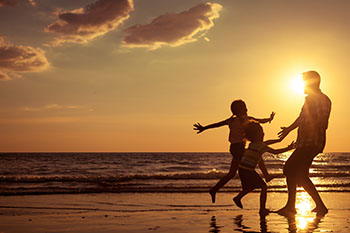
There are plenty of things one can gain from exploring different places such as new friends, new experiences and new stories. When you start exploring new places, you get a better understanding of the people living there including their culture, history, and background.
Studies show that traveling can improve your overall health and enhance your creativity. Therefore, you need to take time out from your daily tasks, office responsibilities, hectic schedule and everyday pressures at least once a year. Plan a tour to a new city with an open schedule and let life present you with the numerous opportunities that are waiting for you.
If you need more convincing, here is a list of all the benefits of traveling.
1. Improves Social and Communication Skills
One of the main benefits of traveling, especially to areas where your native language is not widely used, is that you learn how to communicate with all manner of different people. It could be communicating to find the way to your next destination or asking for the nearest restaurant
2. Ensures peace of mind
We all have stress and tension in our lives. Traveling forces us to temporarily disconnect from our normal routine and it helps us appreciate the people and things you have around. As per a famous saying “we never know what we have until we lose it.”
3. Helps you get original and creative thaughts
It is believed that if someone gets out of their comfort zone, the mind gets more creative. To develop new neural connections that trigger original and creative thoughts, you must explore new places and break out of your daily lifestyles.
4. Broadens your horizons
Travelling helps you connect with different people from different cultures, and this is fatal to prejudice, bigotry, and narrow-mindedness. Meeting people from different cultures and societies will help you see issues and daily life from many different angles.
5. Enhance your tolerance for uncertainty
While traveling, you will find yourself stuck in situations where things don’t always go as planned. Such situations will help you learn to cope with the uncertainties in life.

6. Boost up your confidence
Being in a place where you do not know anyone will assist you to gain confidence and presence of mind. You will develop the ability to cope with obstacles, which will make you a confident person and help you grow as a person.
7. Gets you real-life education
Meeting different people from vast cultures and societies provides an education that is impossible to get in a traditional school, college or a university. There is no substitute for the real thing.
8. Create memories for a life-time
If you travel with friends and family members, traveling helps you build stronger bonds and make memories. You can also save memories of a lifetime by creating photo albums or sharing photos in social media.
9. Helps you have fun
No matter how young or old you are, no matter your profession, there is always a time when the child in you wants to have some fun. When you travel, you do not care what you do at all and you can just break free from the norm.
10. Aids you get to know yourself
While traveling, you might find yourself stuck in situations you would not ordinarily experience in your daily life. Such a situation can help you understand yourself and how you react to such circumstances and prepare you for future similar situations.
Although traveling offers many benefits, it also has some disadvantages if not planned carefully. If you are a patient and taking medication for a disease, do not forget to carry your medication. Keeping jet lag pills handy saves you from unnecessary discomfort.
Those susceptible to allergies should carry allergy medication. Plan your tour in advance, prepare a checklist to keep yourself healthy while traveling and pack important items before you travel.
Travelling is good for the health so decide a place now and pack your bags. Remember, you only live once, so start traveling to different places and get some life-altering experiences.
Source: Benefits of traveling
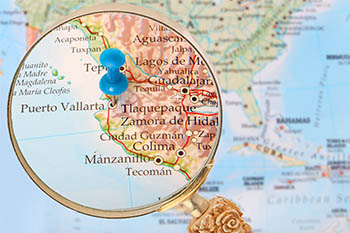
From the moment visitors arrive in Puerto Vallarta in Western Mexico, their travel radar picks up the signal that this destination is different from other big cities in the country. It’s a matter of the history, geography, culture, food and the very people who live in Puerto Vallarta that contribute to the differentiation.
The U.S. accounts for 75% of North American visitors to Puerto Vallarta. Overall American travel to Mexico increased by about 12% in 2016; for Canadians, Mexico ranks as the second most visited destination, after the United States, and before the UK and France.
While just about every visitor to Mexico has a favorite destination that resonates with their particular lifestyle, travel needs and safety concerns, here are some basic tips to tantalize your clients when it comes to getting the most out of a visit to Mexico and in particular, Puerto Vallarta.
1. Revealing the Magic
2. Iconic Experiences
With the emphasis on visitors wanting to connect with the destination, it’s important to know the bounties of not only what the towns or cities hold but also what each of the 31 states may offer visitors. In Jalisco, for example, Puerto Vallarta does not qualify as a Magical Town (due to the fact that it’s a city), but there are seven Magical Towns in the state and there’s a joint promotional program to enhance the Vallarta visitor experience with trips to nearby Guadalajara and Tequila. A new highway, scheduled to open in late 2018, will significantly reduce travel times to the towns. And the state itself promotes three icons: Tequila (the national drink, based in the area around the town of Tequila), Charro (the horsemen, and in fact there are Charro festivals/rodeos in Gauadelajara and Puerto Vallarta) and Mariachi (the music of Western Mexico) that can be found at festivals throughout the state (and the country).
3. Cruising into the Future
Construction has already begun on the Puerto Magico, a complex that will enhance Terminal One and turn it into a customer experience-based Hacienda Tequila with interactive opportunities related to the production of Tequila, Mining and Gastronomy, as well as shopping and the largest aquarium in Latin America. Unlike most Port facilities, the new terminal will be open to both the public and cruise passengers. All the major cruise lines stop in Puerto Vallarta as part of an itinerary that usually includes Mazatlán and Cabo san Lucas and according to Port Agent, Carlos Gerard, the number of cruise ships visiting Puerto Vallarta has increased steadily since 2013. In 2017 145-150 cruise ships will dock for the usual 12-hour visit.

4. Take a Walk in My Shoes
Puerto Vallarta is a very walkable destination. We stayed at the Villa Premiere, which was roughly 20 minutes from the Malecon, the downtown ocean-side boardwalk that’s a hive of activity both day and night. And once in the city, many of the streets are lined with shops, side-walk restaurants, bars and hotels. The Romantic Zone or Old Town, near the pier at Los Muertos has a beach, popular with ex-pats, tourists and pelicans. And “walking in my shoes” implies the friendly reception that visitors receive and the conversations that ensue, whether it’s an explanation of native Huichol beading techniques at Colectiva, an indigenous gallery, or the server at La Cerveceria Union explaining the ingredients of Aguachile, one of their star ceviche dishes, or the bartender at Los Muertos Brewing advising that the seven four-ounce glasses in the artisanal beer sampler may be a bit much to quaff without ordering food to absorb the alcohol.
5. Garden of Delight
Puerto Vallarta is chock-full of special (niche) travel interests. I spent a morning at the Botanical Gardens along with the Vallarta Birders who gather every Thursday morning to spot golden-cheeked woodpeckers, black-chinned hummingbirds, yellow-winged caciques and about 200 other species. The Gardens themselves include Orchids, Cypress, Bursara, Gondo Berries and more. It’s both a gardener’s and a photographer’s dream! Other special interests in the area include snorkeling, scuba, beach activities, zip line, horseback riding, motorcycling, Jeep safari, hiking, trekking, history, culture, architecture, art, and more.
6. Food Electricity
Award-winning chef Mikel Alonso explained that enjoyment of food stimulates an electrical charge in the brain that produces endorphins that are “the drugs of happiness.” Visitors to Puerto Vallarta tend to be pretty happy and star chefs such as Tintoque’s Joel Ornelas reinforce a searing passion for creative dishes made with the freshest ingredients. Even at Mike’s Beach Club on Playa Las Animas, we are told that we will “feel the flavor” of the dishes before we taste them. And they are right!
7. Smiling and Speaking English
Puerto Vallarta was not created to be a tourism hub. In fact some say that the customer service ethos of the city is in the blood of generations of Vallartenese who traditionally looked after the needs of the area’s industries: fishing, mining and agriculture. When the Mayor, Arturo Davalos Pena told me that ‘people smile in your face,” he was serious about the welcoming nature of the city. And North Americans can relax in a destination where most of the people they meet will be able to communicate with them in English.
Puerto Vallarta is a comfortable destination. There’s lots of connectivity with major centres in both the United States and Canada, there’s a great variety of accommodation in the city’s 22,000 rooms from luxury to budget, and it’s a destination where visitors can be as busy or as relaxed as they wish. It’s a place where clients can get the most out of their holiday, on their own terms.